What Is Petty Cash (And What It's Not)
Petty cash is a small fund of physical cash kept on hand for minor business expenses — office supplies, postage, parking, emergency repairs, coffee for the team. It covers things that aren't worth processing through formal procurement or company credit cards.
Petty cash is not a substitute for your business bank account, your accounting system, or your POS. It's a convenience fund for small, immediate expenses. The key is keeping it small, documented, and reconciled.
How to Set Up a Petty Cash System
1. Decide on the Float Amount
The float is how much cash you start with. Estimate your typical small expenses over 2–4 weeks. For most small businesses, $200–$500 is enough. A construction crew or field team might need $1,000–$2,000. Start small — you can always increase it. See our float sizing guide for the exact formula.
2. Appoint a Custodian
One person manages the cash box. They control access, record transactions, and are responsible for the balance. This can be the owner, office manager, or a trusted team lead. The custodian should not be the same person who approves replenishments — that's a basic internal control.
3. Get a Secure Cash Box
A lockable metal cash box is standard. Keep it in a secure location — locked drawer, safe, or office cabinet. Only the custodian should have the key. Avoid leaving it in open areas, vehicles, or unlocked desks.
4. Create a Tracking System
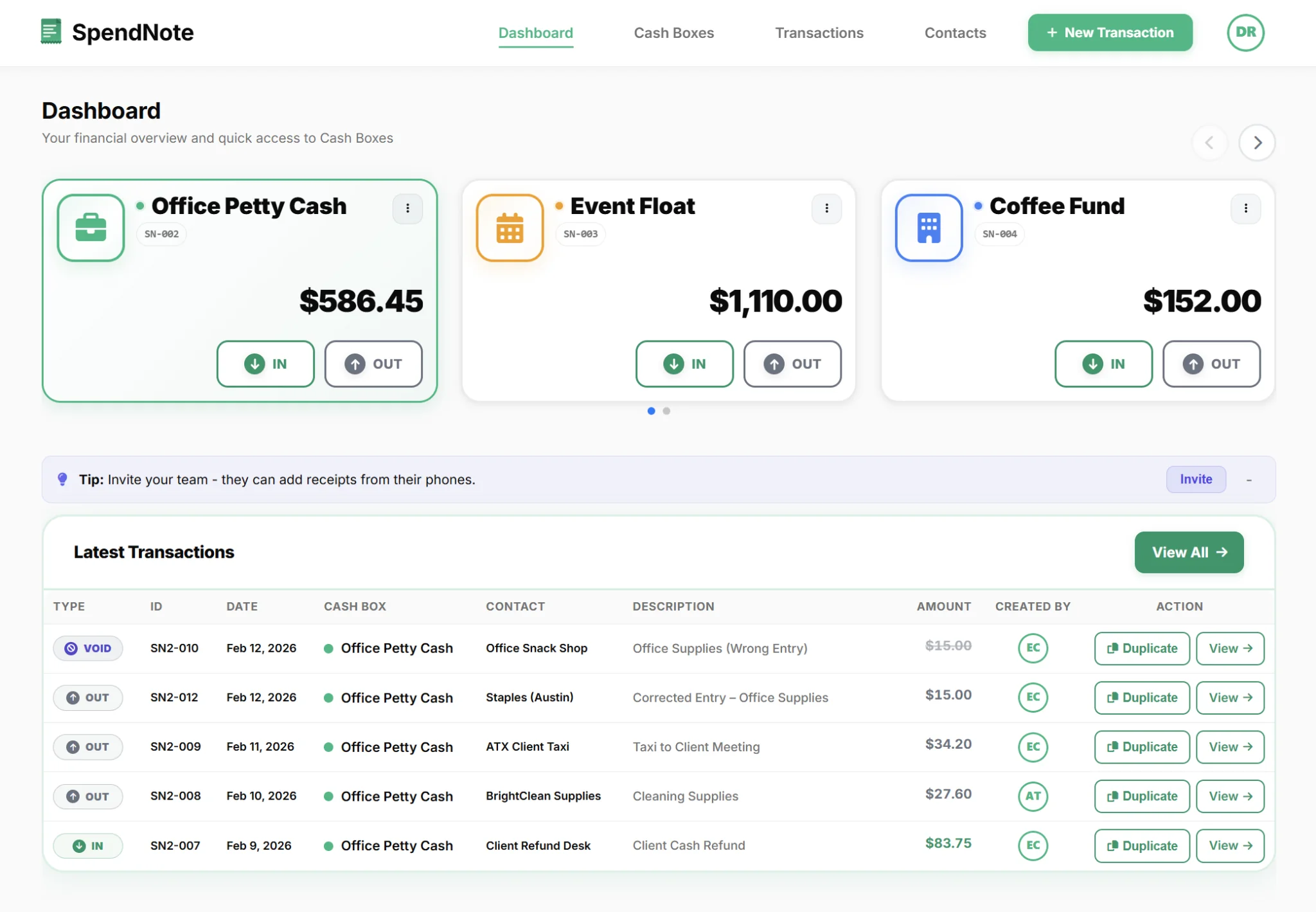
Every dollar in and every dollar out needs a record. You can use a petty cash log, a voucher system, or a digital petty cash tracker like SpendNote. The method matters less than consistency — the worst system is one people don't use.
5. Set Simple Rules
Write a short petty cash policy: maximum single disbursement (e.g., $100), what expenses are allowed, who can request cash, and how receipts should be submitted. Keep it on one page. If it's too long, nobody reads it.
Day-to-Day Petty Cash Management
Once the system is set up, the daily routine is simple:
- Someone needs cash — they request it from the custodian
- Custodian disburses the cash — records the amount, recipient, and purpose
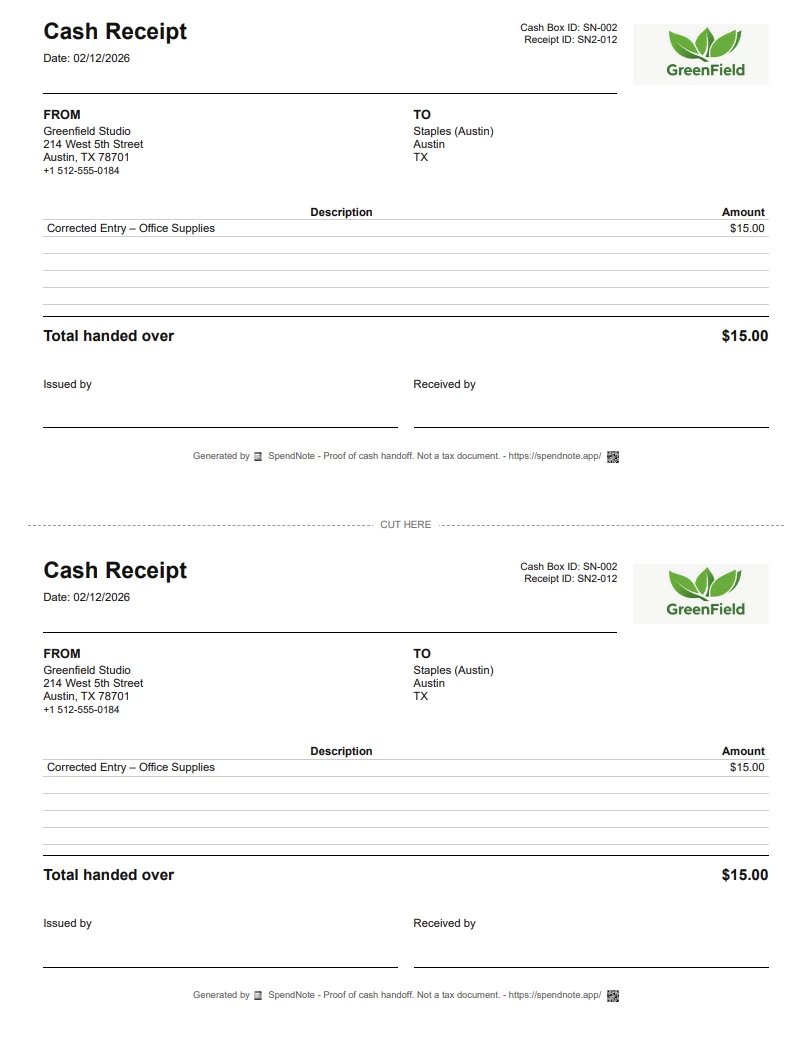
- A receipt is generated — proof that the cash changed hands
- Change is returned — logged as a separate IN transaction
- End of day — a quick daily cash report confirms the balance
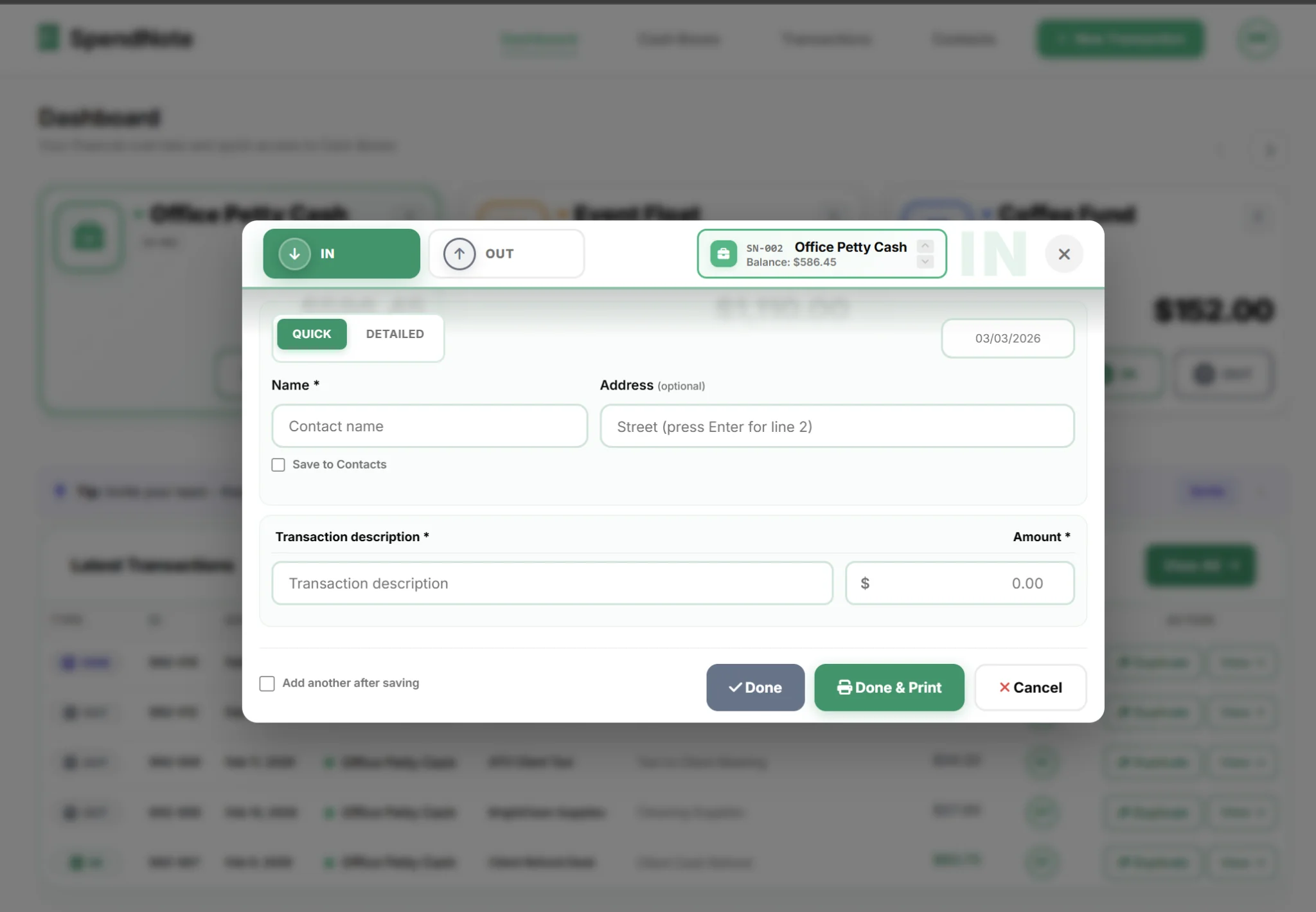
The critical discipline: log at the moment of transaction, not later. The #1 reason petty cash systems fail is delayed recording. By end of day, people forget amounts, lose receipts, and guess at details.
Petty Cash Management Made Simple
Set up your first cash box in under a minute. Log transactions, generate receipts, and reconcile — all in one place.
Create Free AccountReconciliation and Replenishment
Reconciliation means counting the physical cash and comparing it to the recorded balance. Use a two-person count for added accountability. Do this at least weekly. If they match, great. If they don't, investigate immediately — here's how to find the discrepancy.
Replenishment is topping up the fund back to the original float. When the cash gets low (typically below 20–30% of the float), request a replenishment. The replenishment amount should equal the total documented spend since the last top-up.
Common Petty Cash Mistakes
- No designated custodian — everyone accesses the cash, nobody's responsible
- Logging transactions later — "I'll write it down tonight" turns into "I forgot"
- No receipts for small amounts — $5 here, $10 there, $300 missing by month-end
- Too much cash in the box — $5,000 in petty cash is a theft magnet and a security liability
- No written policy — without rules, people make their own rules
- Mixing personal and business cash — once they mix, separating them is painful
- Reconciling monthly instead of weekly — problems compound when you wait
When to Use a Petty Cash App
A paper log works for a solo operator with rare expenses. But once you have multiple people handling cash, multiple cash boxes, or more than a few transactions per week, a dedicated tool pays for itself in time saved and errors prevented.
SpendNote gives you automatic balance calculation, per-user transaction attribution, instant receipt generation, and no spreadsheet formulas to break. You can even manage your cash boxes remotely from any device. If you're spending more time managing the log than managing the business, it's time to switch.
Important: SpendNote is for internal cash tracking and team accountability. It does not replace your POS, tax invoicing, or accounting system. Your accountant handles the books — SpendNote handles the day-to-day cash box.
Frequently Asked Questions
How much money should I keep in petty cash?
A common starting point is 2–4 weeks of estimated small expenses. For most small businesses, this is $200–$1,000. Track your actual spending for a month to calibrate. Too much cash sitting idle is a security risk; too little means constant replenishment.
Who should be responsible for petty cash?
One designated person — the petty cash custodian. This is usually an office manager, team lead, or the business owner. The custodian controls access, logs transactions, and is accountable for the balance. For audit purposes, the custodian should not be the same person who approves replenishments.
How often should I reconcile petty cash?
At minimum weekly. If multiple people handle cash or transaction volume is high, daily reconciliation is better. The longer you wait between reconciliations, the harder it is to trace discrepancies.
Does SpendNote replace accounting software for petty cash?
No. SpendNote handles internal cash tracking — logging transactions, generating receipts, and maintaining an audit trail. Your accounting software handles the bookkeeping entries, tax reporting, and financial statements. SpendNote feeds into your accounting workflow, it doesn't replace it.