Why Cash Goes Missing at Shift Change
Shift change is the most vulnerable moment for cash. One person stops tracking, another starts, and in the gap between them, things fall through. It's not always dramatic — most shift discrepancies are $10–$50 and come from boring, preventable causes.
The Handover Gap
Shift A makes a transaction at 2:55 PM. Shift B arrives at 3:00 PM and starts counting. That 2:55 transaction wasn't recorded yet. Now the count doesn't match, and Shift B thinks the cash is short.
Miscounted Handover
The outgoing shift counts $480. The incoming shift counts $470. Who was right? Without both people counting together and signing off, there's no way to know. One of them miscounted, and the discrepancy follows the cash all day.
Unlogged Small Expenses
Someone on the morning shift took $15 for parking and forgot to log it. The afternoon shift comes in, counts the cash, and finds it $15 short. No one remembers the parking until the next day — if ever.
Shared Cash Box, No Attribution
Three people handled the cash during the shift. The register is short $25. Was it the opening count? A midday transaction? The last sale? When transactions aren't attributed to a specific user, finding the source is guesswork.
How to Investigate a Shift Discrepancy
- Recount. Have both the outgoing and incoming person count together. Agree on the number before investigating further.
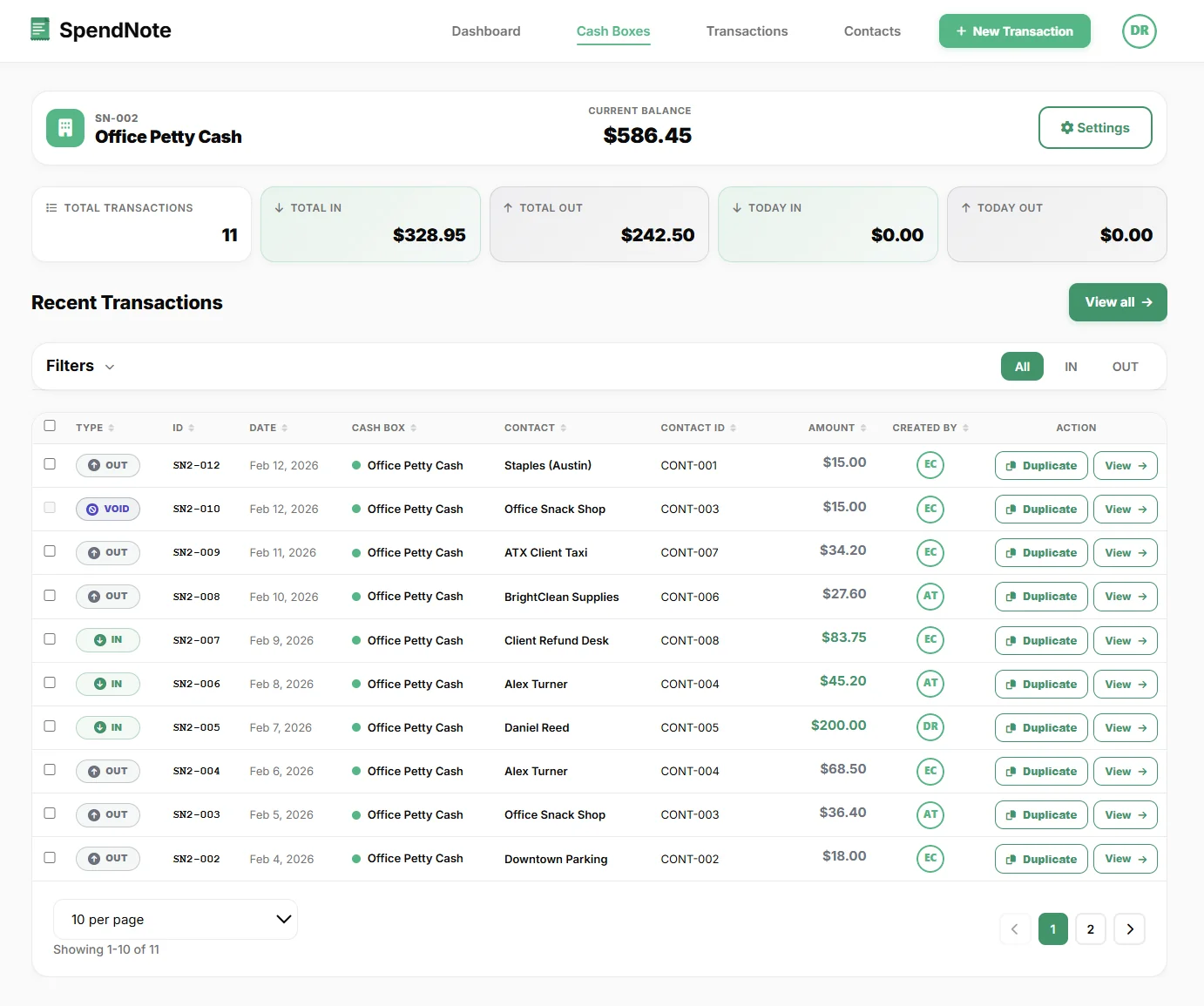
- Identify the time window. When was the last confirmed-correct count? Every transaction between that point and now is a suspect.
- Review every transaction in that window. Look for entries without receipts, transactions near shift-change time, and any transactions with round amounts (a sign of estimates).
- Check for timing overlap. Did someone from Shift A make a transaction after Shift B started counting? This is the most common source of "phantom shortages."
- Look at the user log. If your system tracks who logged each transaction, filter by user. Does one person have an unusual number of entries or a pattern of timing gaps?
Sign Off Every Handover — Both Shifts Keep a Copy
Every transaction signed, timestamped, attributed. The outgoing and incoming shift both keep a signed copy of the count. No more "who did what?" Free to start, no credit card.
Create First Signed HandoverHow to Prevent Shift-Change Cash Shortages
- Dual count at every handover. Both the outgoing and incoming person count together using a cash count sheet. Both sign off on the number. If there's a discrepancy later, you know it happened after the handover.
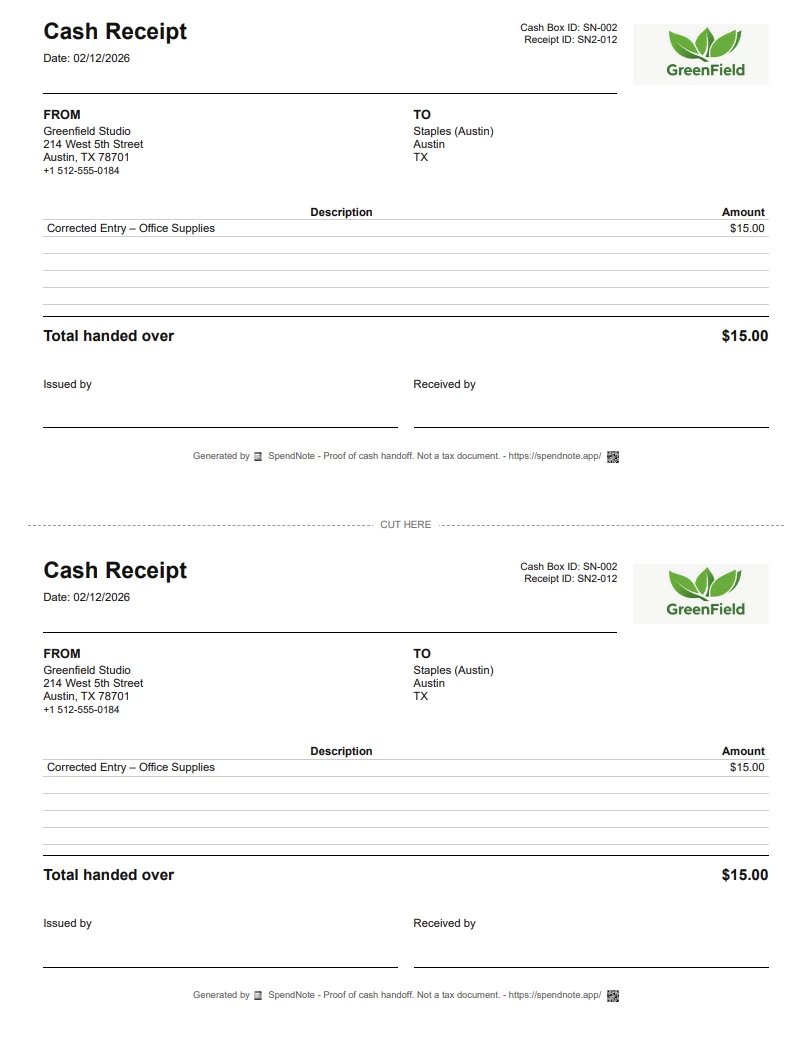
- Generate a cash handoff receipt at every shift change. A timestamped document that says "Shift A handed $X to Shift B at [time]." This eliminates the "I thought it was $480" debate.
- Freeze transactions during the count. No one touches the cash box while the handover count is happening. Five minutes of discipline saves hours of investigation.
- Log every transaction immediately. Not "after the rush," not "at end of shift." The moment cash moves, it gets logged. This is where a digital tracker beats paper — it's faster to tap a screen than fill out a form.
- Run a daily cash report at end of day. Even if shifts don't have issues, the end-of-day report catches anything that slipped through.
Important: SpendNote provides internal cash tracking and handoff documentation. It does not replace your POS system, accounting software, or formal HR investigation procedures. If you suspect theft, consult your legal advisor before taking action.
Frequently Asked Questions
Why does cash come up short at shift change?
The most common causes are transactions logged by one shift but paid out by the next, unrecorded small expenses, incorrect change given to customers, and miscounts during the handover. The root cause is almost always a documentation gap during the transition.
How should cash be counted at shift change?
Both the outgoing and incoming shift lead should count the cash together. Count every denomination, record the total, and both sign off. This dual count creates accountability — if the cash is short later, you know it balanced at the handover point.
What if the same shift always has a cash discrepancy?
A pattern points to a systemic issue — not necessarily theft. Check if that shift has more transactions, more cash-back requests, or less experienced staff. Review transaction logs for that shift specifically. The answer is usually a process gap, not a person problem.
Can SpendNote track cash by shift?
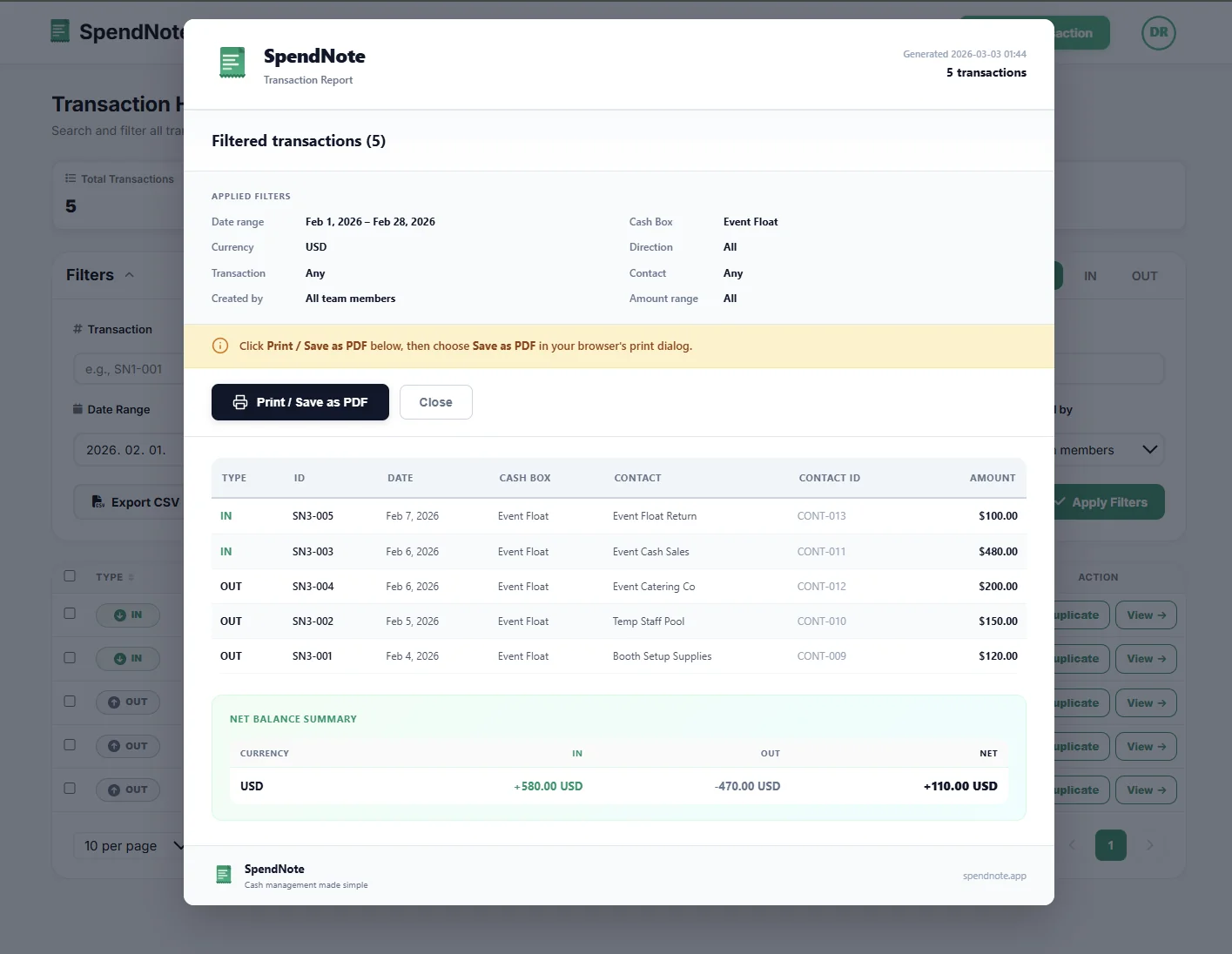
Yes. Every SpendNote transaction is timestamped and attributed to a specific user. You can filter the transaction history by time range to see exactly what happened during a specific shift. At handover, the outgoing shift lead can export a shift summary as a branded PDF report.