When the Cash Box Comes Up Short
You open the cash box, count it, and it's wrong. Not by a lot — maybe $50, maybe $120. But it's definitely short, and the records don't explain why.
This is one of the most stressful moments in running a small business. Your mind immediately goes to the worst case. But before you assume anything, you need data — not suspicion.
Most cash box shortages are caused by process failures, not theft. Unrecorded transactions, incorrect change, missing receipts, and double-counting errors explain the majority of discrepancies. The challenge is proving what actually happened.
How to Investigate a Cash Box Shortage
- Recount the cash. Seriously. Count it twice, with a second person present. Miscounting is embarrassingly common.
- Identify the time window. When was the last confirmed-correct count? Every transaction between then and now is in scope.
- Review the transaction log. If you have one, go through every entry. Look for missing receipts, round-number transactions (estimates, not actuals), and entries without a named person.
- Check who had access. How many people touched the cash box during the window? Can any of them confirm specific transactions? The fewer people with access, the faster the investigation.
- Look for patterns. Is this the first time? Does it always happen on the same day, the same shift, or after the same type of expense? Patterns point to process gaps.
- Document the discrepancy. Even if you can't explain it today, write down the amount, the date, and everything you checked. If it happens again, the pattern becomes clearer.
Why Most Cash Boxes Have No Audit Trail
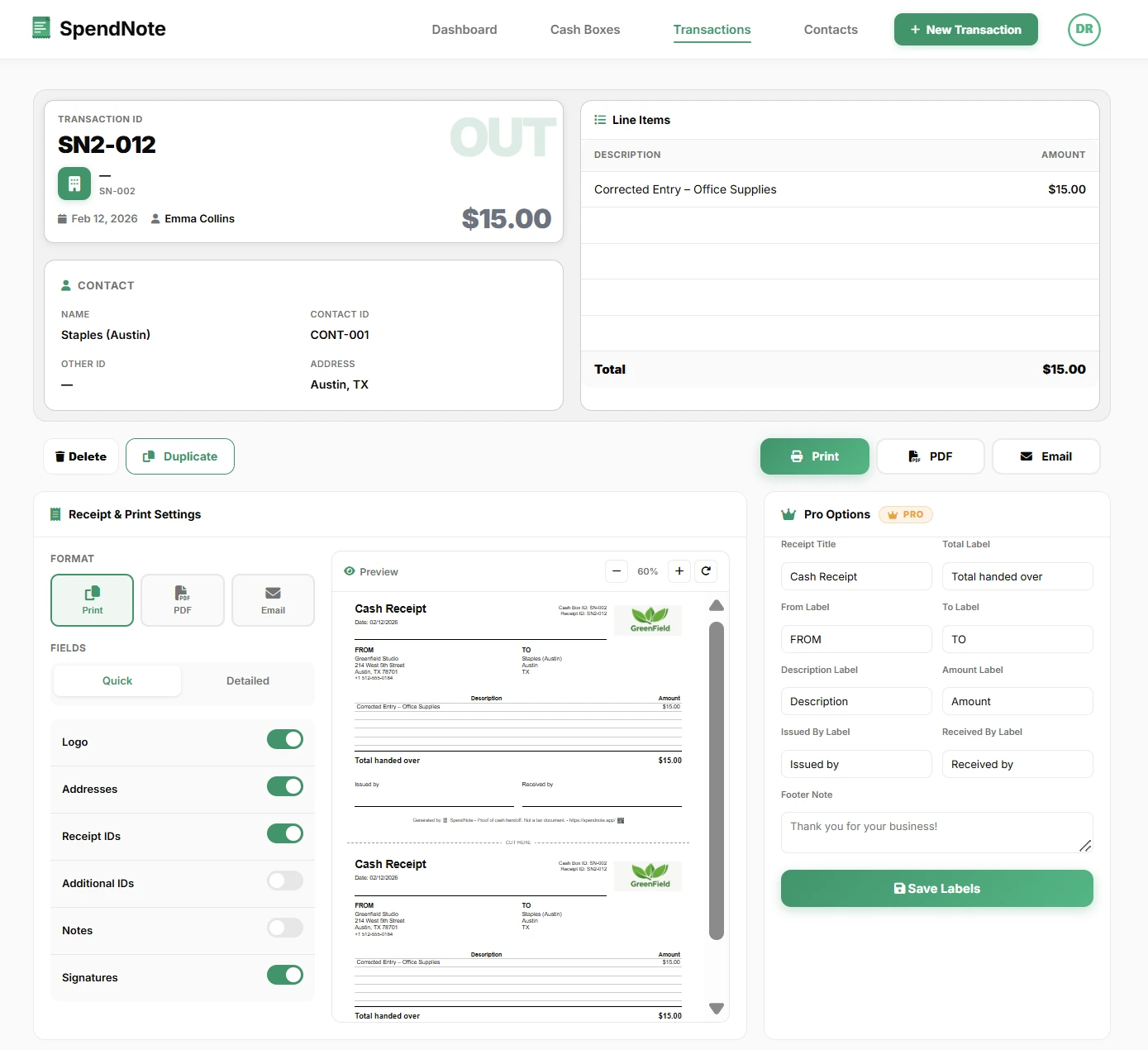
The problem isn't usually theft — it's that the cash box has no memory. Paper logs get lost. Sticky notes disappear. Spreadsheets don't record who made each entry or when.
Without an audit trail, you can't answer the basic question: "Who took money from the cash box, when, and why?" Not because the information doesn't exist, but because nobody captured it at the time.
The $80 That Nobody Took
Monday morning: cash box is $80 short. Three people handled cash on Friday. Nobody remembers taking $80. Two weeks later, someone finds a receipt in their jacket pocket — a hardware store run for $78.50 that was never logged. The remaining $1.50 was a rounding error. No theft. Just a receipt that fell through the cracks.
Every Dollar Tracked. Every User Identified.
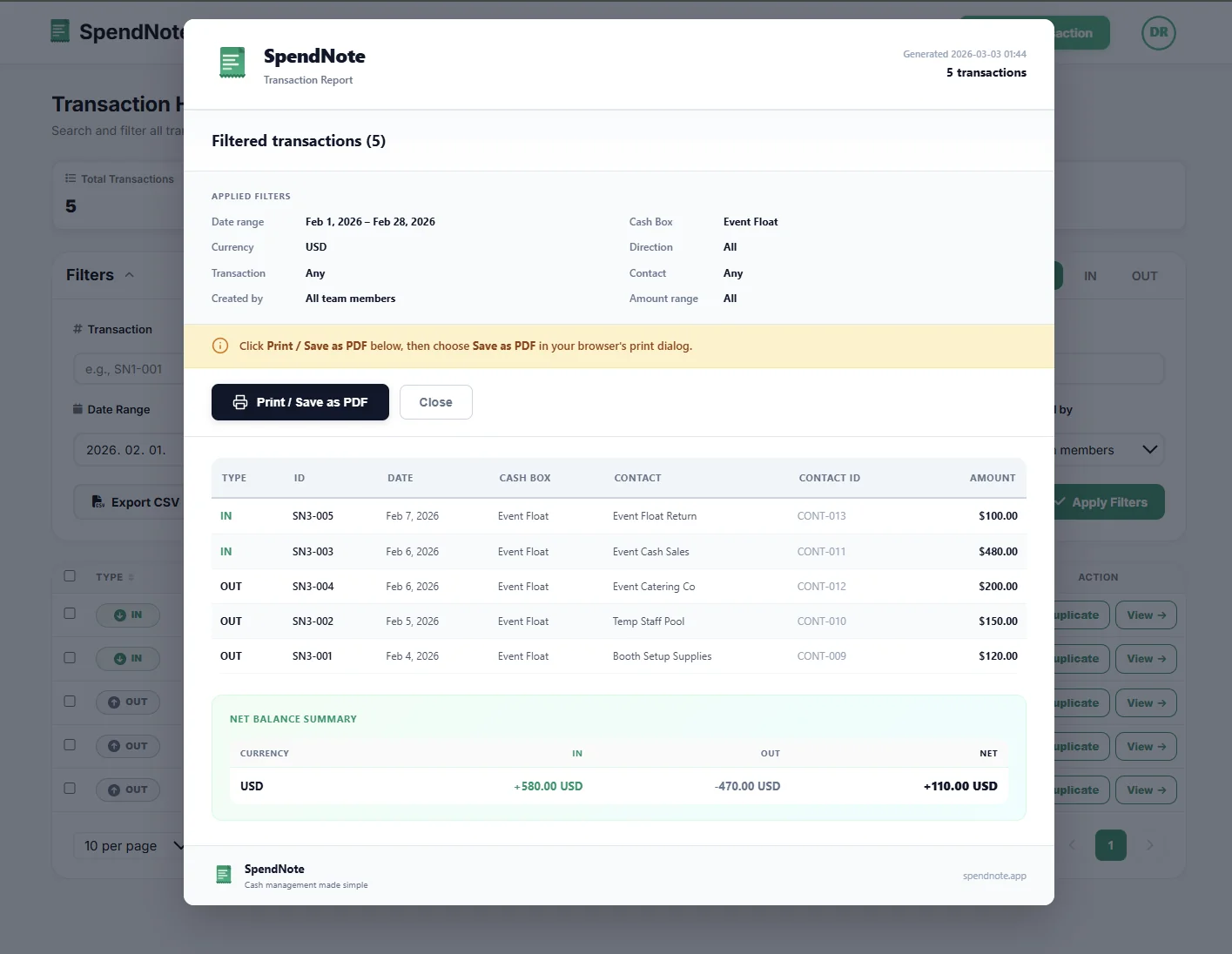
SpendNote attributes every transaction to a specific user with a timestamp. No more "who took the money?" without an answer.
Create Free AccountHow to Prevent Cash From Going Missing
- Require a receipt for every disbursement. No exceptions, even for $5. Maintain a strict cash paid out log. When a receipt is generated at the time of transaction, "I forgot to log it" stops being an excuse.
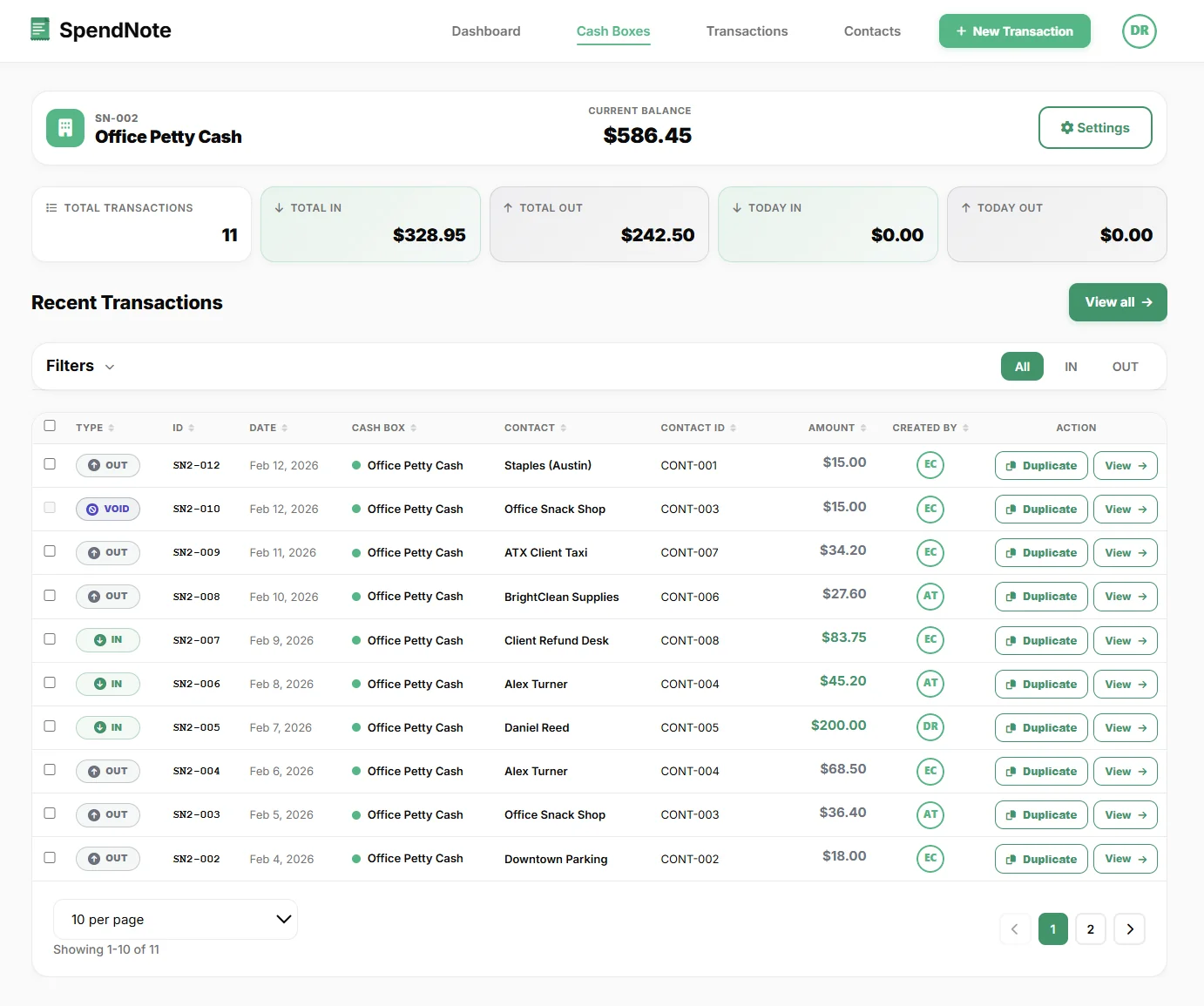
- Attribute every transaction to a user. SpendNote records which user logged each entry. If the cash is short, you can see exactly which transactions were (or weren't) logged by each person.
- Limit access to the cash box. One custodian, one key. Others request cash from the custodian, who logs the disbursement and generates a receipt. Fewer access points = fewer gaps.
- Reconcile frequently. Weekly at minimum, daily if possible. A $20 discrepancy caught today is easy to trace. A $200 discrepancy discovered next month is nearly impossible.
- Make voiding transparent. In SpendNote, voided transactions leave a permanent record. Nobody can silently delete an entry — the void itself is part of the audit trail.
Important: SpendNote provides internal cash tracking and audit trail functionality. It is a documentation tool, not a surveillance tool. If you suspect employee theft, consult your legal advisor or HR professional before taking action. SpendNote does not replace formal HR investigation procedures, law enforcement involvement, or legal counsel.
Frequently Asked Questions
How do I find out who took money from the cash box?
Review the transaction log for the period when the cash went missing. Look for unrecorded withdrawals, transactions without receipts, or gaps in the timeline. If your system tracks which user logged each transaction, filter by user to identify inconsistencies. The answer is usually in the data — not in confrontation.
What should I do if cash keeps going missing?
First, verify your tracking system is working — are all transactions being logged? Then limit access: only one custodian should handle the cash box. Reconcile daily instead of weekly. If the problem persists despite good processes, you may have an access control issue that needs to be addressed with your team.
How can I prevent cash from going missing?
Three things: (1) require a receipt for every disbursement — no exceptions, (2) attribute every transaction to a specific user, and (3) reconcile frequently so discrepancies are caught within hours, not weeks. When people know every dollar is tracked and attributed, accountability follows naturally.
Does SpendNote show who handled each transaction?
Yes. Every transaction in SpendNote is attributed to the user who logged it, with a timestamp. Admins and owners can see the full audit trail — who created each entry, when, and for how much. Void transactions also leave a trail and cannot be silently deleted.