Why Petty Cash Doesn't Add Up
A petty cash discrepancy means the physical cash in the box doesn't match the recorded balance. It's one of the most common — and most frustrating — problems in small business cash management.
The gap could be $5 or $500. Either way, the cause is almost always the same: something happened that didn't get recorded. The question is what, and when.
Common Causes of Petty Cash Shortages
Unrecorded Transactions
The #1 cause. Someone took $40 for supplies and forgot to write it down. Or they wrote it on a sticky note that got lost. The cash is gone, the record isn't there, and the box comes up short.
Missing Receipts
The transaction was recorded, but the receipt was lost, thrown away, or never created. Without a receipt, there's no proof of what was spent — and no way to verify the amount is correct.
Wrong Change Returned
Someone took $100 for a $67 purchase and returned $23 instead of $33. A $10 error that nobody notices until the count. Mental math under pressure is unreliable.
Double or Missed Entries
In a paper log or spreadsheet, it's easy to record a transaction twice or skip one entirely. Both create a discrepancy between the recorded and actual balance.
Unauthorized Withdrawals
The hardest to catch and the hardest to talk about. If multiple people have access to the cash box and there's no per-transaction record of who took what, proving what happened is nearly impossible.
How to Find the Discrepancy
When your petty cash doesn't balance, follow this sequence:
- Recount the cash. Seriously. Miscounting is more common than actual shortages. Use a cash count sheet to count by denomination. Count twice, ideally with a second person.
- Check the last known good balance. When was the last time the box balanced perfectly? Start investigating from that point forward.
- Review every transaction since then. Look for entries without receipts, entries with round numbers (a sign of estimates, not exact amounts), and any gaps in the timeline.
- Look for timing patterns. Does the shortage always happen on the same day? After the same person handles cash? After a specific type of expense?
- Document everything. Even if you can't explain the discrepancy today, write it down. Patterns emerge over time.
Stop Guessing Where the Cash Went
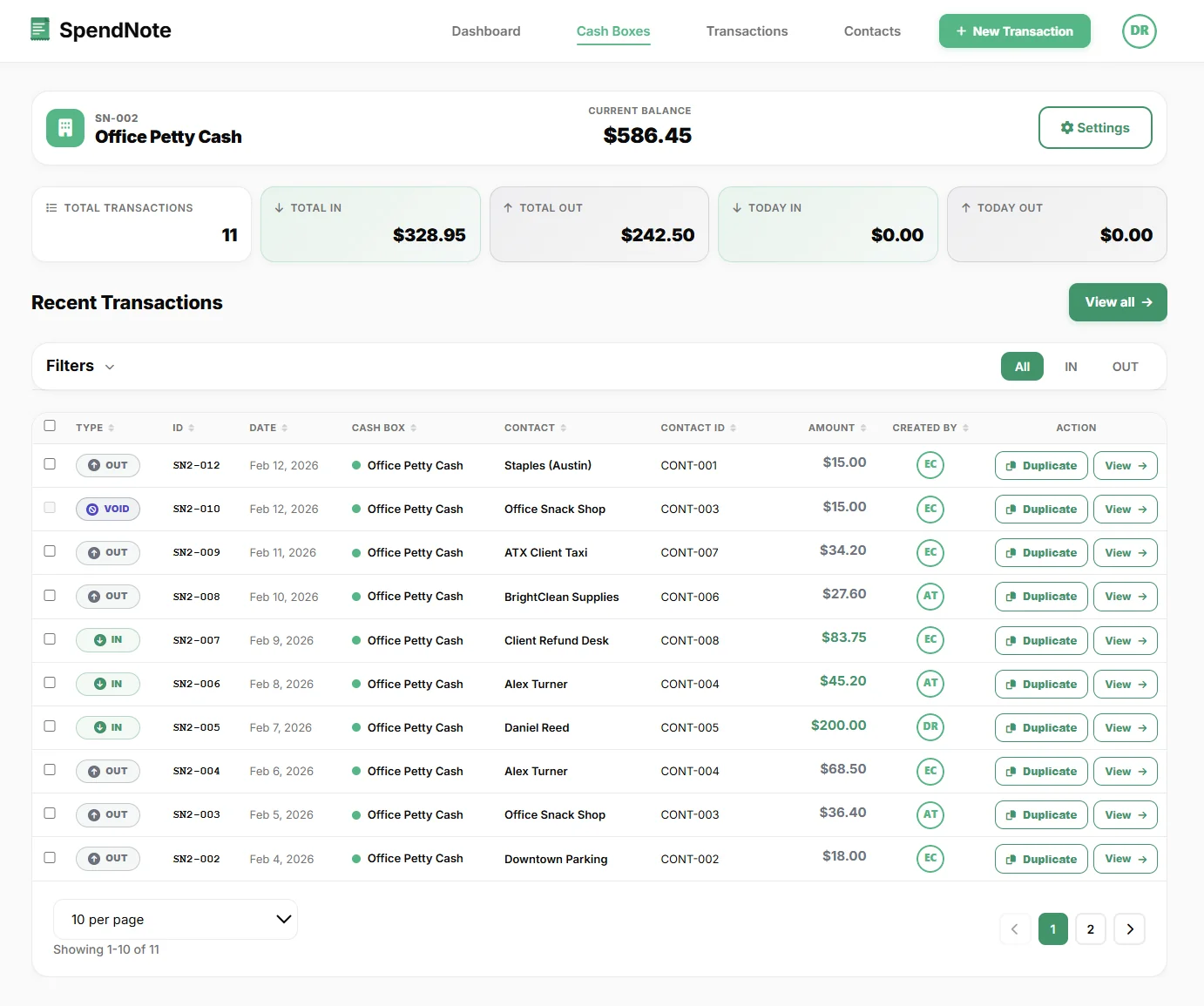
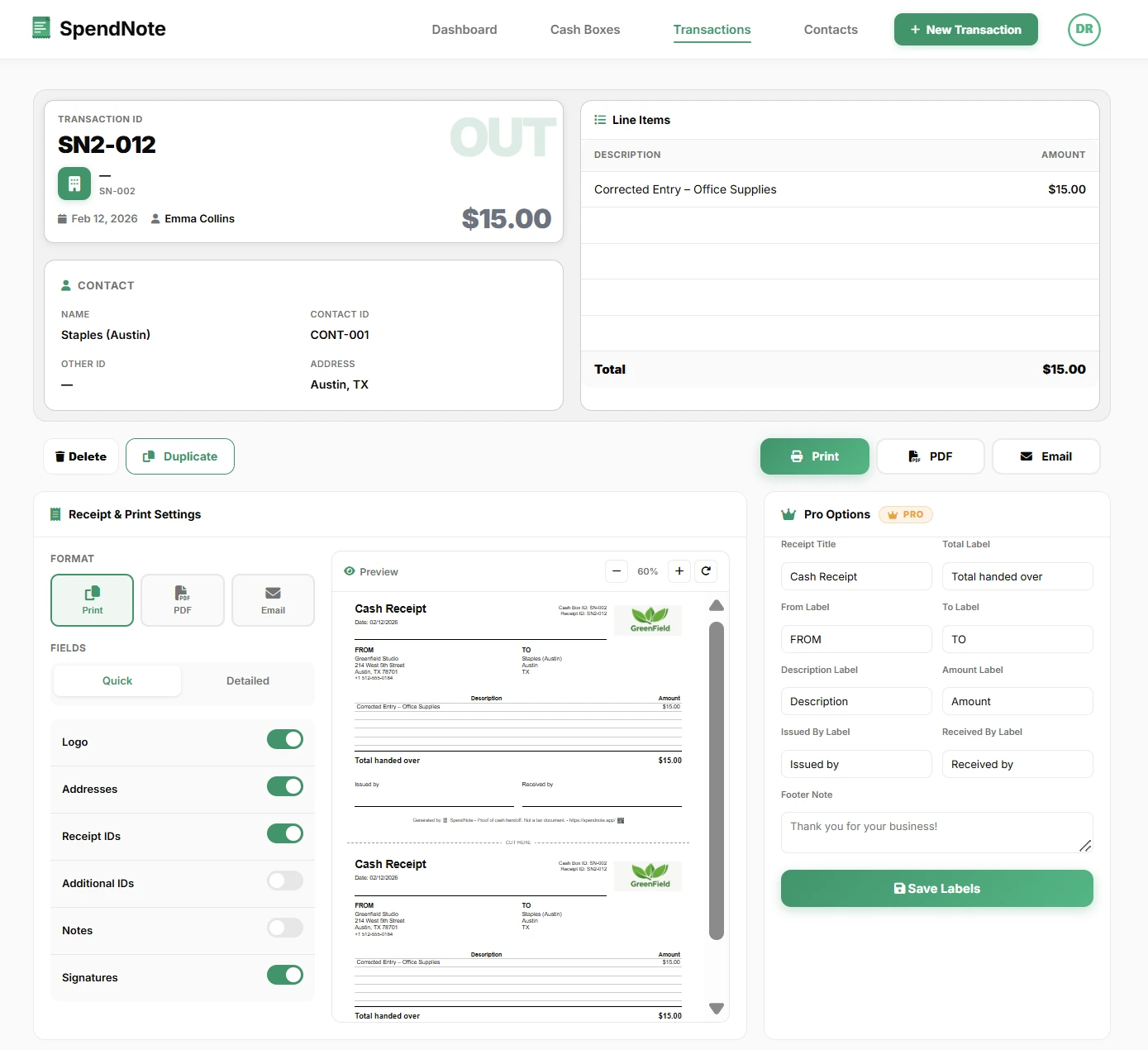
With SpendNote, every transaction is timestamped, attributed to a user, and generates a receipt. The balance calculates itself.
Create Free AccountHow to Prevent Petty Cash Shortages
Log at the Moment of Transaction
The biggest prevention measure. Don't log later, log now. The longer the gap between "cash leaves the box" and "it gets recorded," the more likely something gets lost. With a digital petty cash tracker, logging takes 15 seconds.
Generate a Receipt Every Time
No exceptions. Every disbursement gets a receipt — even $5 for coffee. The receipt is proof that the transaction happened, who received the cash, and when. Without receipts, audits become guesswork.
Reconcile Weekly, Not Monthly
A monthly petty cash reconciliation finds problems too late. Weekly reconciliation catches discrepancies while the details are still fresh and the amounts are still traceable.
Limit Access
The fewer people with direct access to the cash box, the easier it is to trace problems. One custodian, one key. Others request cash from the custodian, who logs the disbursement.
Use Automatic Balance Calculation
Manual math creates errors. A petty cash log that calculates the running balance automatically eliminates formula mistakes and gives you an expected balance to count against.
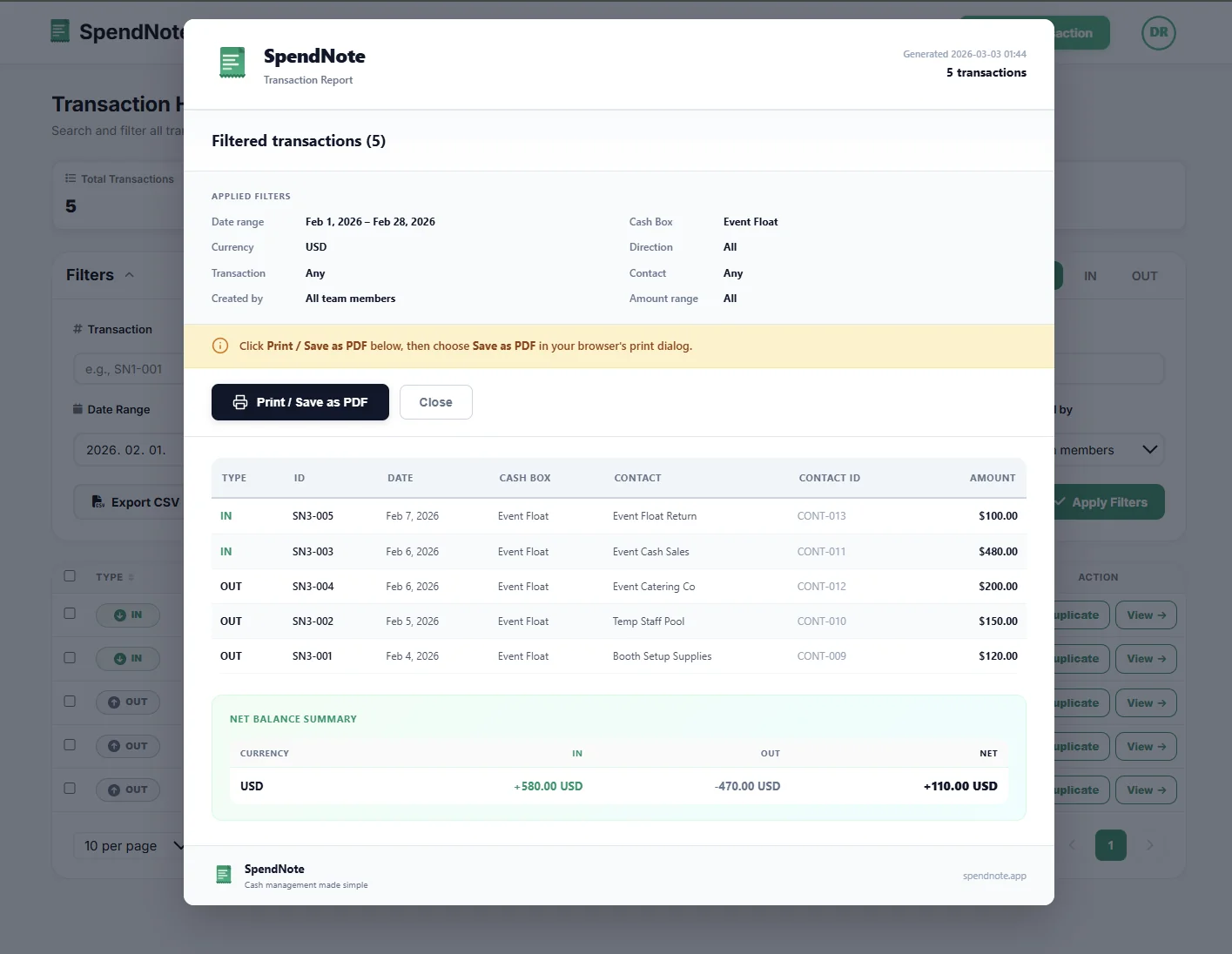
Important: SpendNote provides internal cash tracking and receipt generation to help prevent and investigate petty cash discrepancies. It does not replace your accounting software, formal audit procedures, or tax documentation. Use SpendNote records as supporting documentation alongside your official accounting system.
Frequently Asked Questions
Why is my petty cash short at the end of the day?
The most common causes are unrecorded transactions, missing receipts, incorrect change, and rounding errors. Less common but possible: unauthorized withdrawals. Start by reviewing every transaction since the last time the cash balanced and look for gaps.
How much of a petty cash discrepancy is acceptable?
Any discrepancy should be investigated, but most businesses consider anything under $5 to be within tolerance for rounding and coin-counting errors. Repeated small shortages are a bigger red flag than a single one-time discrepancy.
What should I do when petty cash doesn't balance?
First, recount the cash. Then compare the actual count to your recorded balance. Review every transaction since the last reconciliation. Check for missing receipts, double entries, or transactions logged with the wrong amount. Document the discrepancy even if you can't explain it — a pattern may emerge over time.
How can I prevent petty cash shortages?
Log every transaction at the time it happens — not later. Generate a receipt for every disbursement. Reconcile at least weekly. Limit who has access to the cash box. Use a tool with automatic balance calculation so manual math errors are eliminated.