Create a Signed Cash Advance Receipt in Seconds
When you give an employee cash for an expense, travel, or salary advance, both sides sign and keep a copy — no template, no spreadsheet, no payroll setup.
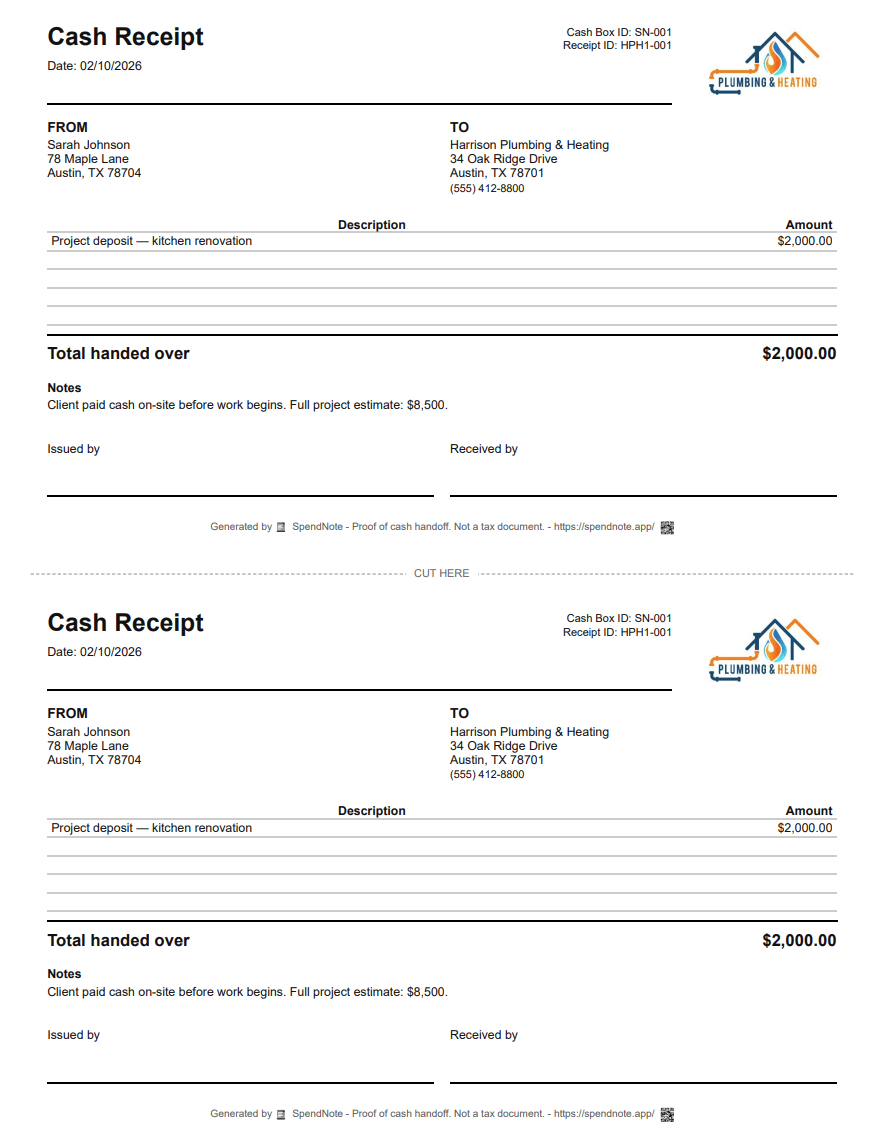
Make an employee advance receipt right now
Fill in the fields, then print two copies or save it as a PDF. Free, no account, nothing to install.
Why Document Employee Cash Advances?
Your warehouse manager needs $500 before payday. You hand it over from the office cash box. Two weeks later, payroll deducts $500. But the employee says they only received $400. Who's right?
Without a receipt, it's a he-said-she-said situation. With a receipt, you pull up the record: $500, March 3, signed by both parties. Dispute resolved before it even starts.
This is about the handoff, not the payroll. SpendNote documents that the cash was given. The actual payroll deduction is your accountant's or HR's job. Two separate steps — but the first one needs proof too.
Who This Is For
Small Business Owners
You have 5-20 employees. Sometimes someone needs an advance before payday. You reach into the office cash box, hand them the money, and need a record of it. Simple, fast, no paperwork pile.
Restaurant & Retail Managers
Staff turnover is high, cash is always moving. When an employee asks for a $200 advance from the register, a receipt means the manager, the employee, and the owner all have the same record.
Construction & Field Crew Leads
Workers on a job site sometimes need cash for materials, fuel, or a payroll advance. The crew lead hands over the money and logs it instantly. Back at the office, the record is already there.
Also Covers: Business Expense & Travel Advances
The same handoff workflow works for any cash advance given to an employee — not just salary advances. If you hand someone cash for an upcoming business expense or a trip, the receipt is the proof that the money changed hands. Settlement (receipts back, unspent cash returned) happens later, on a different track.
Business Expense Advance
Your office manager needs $300 in cash to buy a delivery of supplies from a cash-only vendor today. Hand over the money, log it as "Expense advance — office supplies, vendor X", and both sides have proof. When the manager returns with receipts (and any change), you reconcile against the original $300.
Travel Advance
Your sales lead is heading to a client visit and needs $800 for transport, meals, parking, and tips. Hand over the cash, log it as "Travel advance — client visit, May 12–15". After the trip, they bring back receipts plus any unspent cash. Original record + receipts + remainder = clean reconciliation.
Petty Cash Advance to a Team Member
Someone on the team needs cash from the petty cash box for an immediate purchase, with the receipt to follow. The custodian logs the advance as "Petty cash advance — pending receipt". When the receipt comes back, the entry is settled and the box balances.
Salary, expense, travel, petty cash — same flow. The receipt documents the moment cash leaves your hand. How the advance is settled afterwards (paycheck deduction for salary advances, receipts plus returned cash for expense or travel advances) is a separate step in your accounting or HR system. SpendNote covers the handoff, instantly and provably.
What an Employee Advance Receipt Should Include
- Amount advanced — The exact cash given to the employee
- Employee name — Who received the advance
- Date — When the advance was given
- Purpose note — "Salary advance" or "Payroll advance — deduct from March paycheck"
- Who gave it — The manager or owner who handed over the cash
SpendNote fills in date, time, and receipt number automatically. You just enter the amount, pick the employee, and add a note. Done in under 30 seconds.
How It Works
Step 1: Open SpendNote in your browser (phone or computer) when giving the advance.
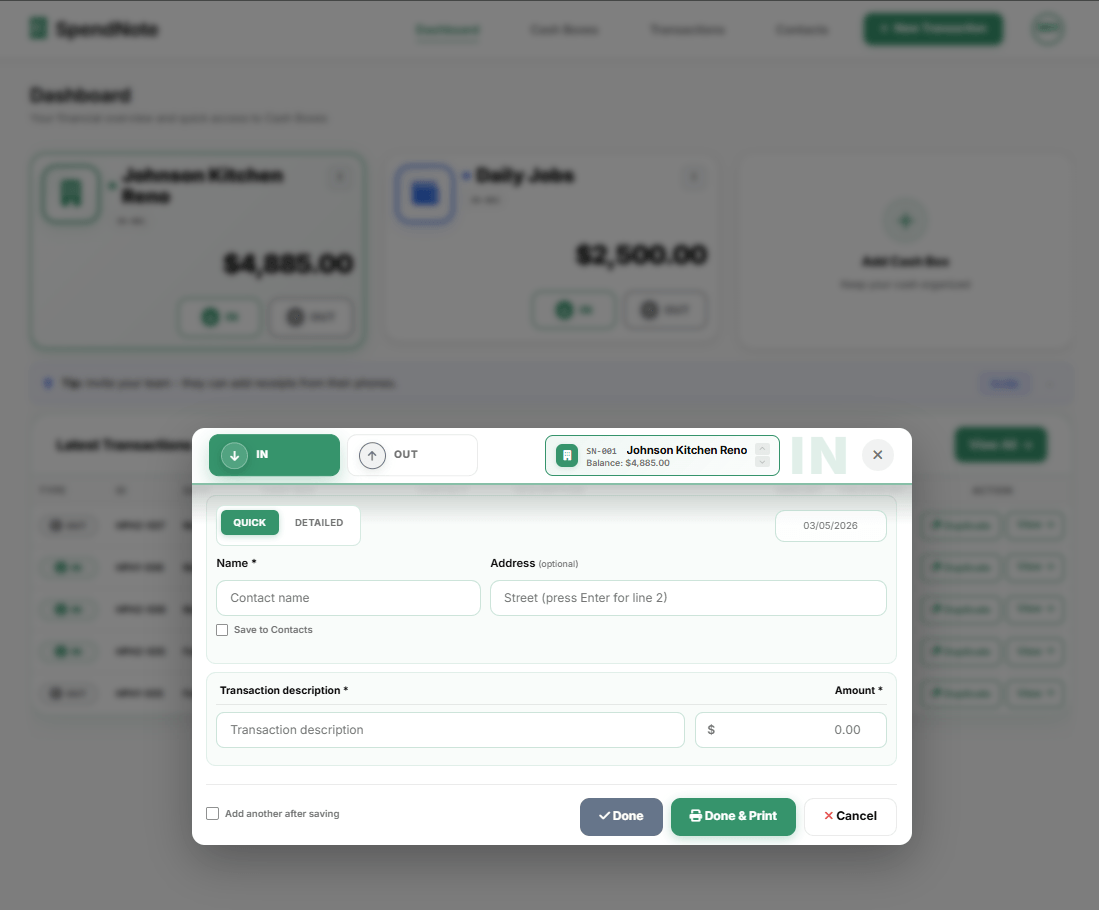
Step 2: Tap "OUT" (cash leaving your business). Enter the amount and select or add the employee as a contact.
Step 3: Done. The receipt is generated instantly. Print it for signing, email a copy to the employee, or just keep the digital record. When payroll comes, you have proof of exactly what was advanced.
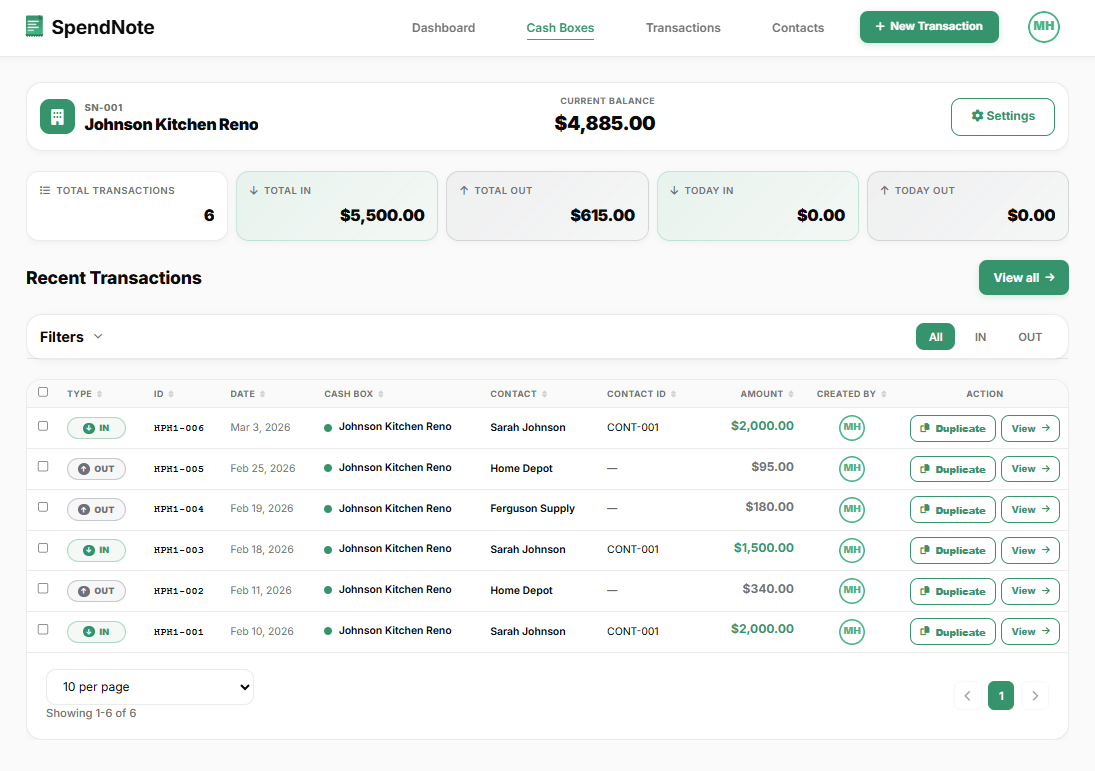
Each employee is saved as a contact. If someone asks for multiple advances, you can pull up their complete history instantly — total advanced, dates, everything.
Create Your Next Cash Advance Receipt
Quick signed receipt for every advance — both sides keep a copy. Free to start, no credit card.
Create Advance ReceiptImportant: SpendNote receipts document that cash was handed over — they are not payroll slips, tax documents, or official accounting records. The actual payroll deduction and reconciliation should be handled by your payroll system or accountant. SpendNote simply proves the moment cash changed hands.
This Is Not a Payroll Document
Let's be clear about what SpendNote does and doesn't do:
- It does: Record that you gave a specific employee a specific amount in cash on a specific date
- It does not: Handle payroll deductions, generate tax forms, or integrate with payroll software
The advance receipt documents the handoff. The payroll deduction is a separate step handled by your accountant or HR. Both are needed — SpendNote covers the first one.
Related Pages for Different Cash-Event Receipts
This page is about giving an employee cash before settlement. If you need a receipt for a different cash event, here's where to go next:
- Someone paid you in cash and you need to give them a receipt → see proof of cash payment.
- You're topping up the petty cash float → see petty cash replenishment receipt.
- You're handing the cash box itself to another person → see cash handoff receipt.
Frequently Asked Questions
Should I give a receipt when giving an employee a cash advance?
Absolutely. A receipt protects both the employer and the employee. The employer has proof the advance was given, and the employee has proof they received it. This prevents disputes when the advance is deducted from the next paycheck.
Is an employee cash advance receipt a payroll document?
No. A SpendNote receipt documents that cash was handed over. It is not a payroll slip, tax document, or accounting record. The actual payroll deduction is handled separately by your payroll system or accountant.
Can I track advances for multiple employees?
Yes. Each employee is saved as a contact in SpendNote. Every advance is logged with the employee name, amount, and date. You can search by employee to see their full advance history at any time.
What is the difference between an employee advance and a contractor advance?
An employee advance is a salary or payroll advance given to an internal team member, deducted from their next paycheck. A contractor advance is a prepayment to an external service provider for upcoming work. Both need documentation, but the relationship and repayment process are different.
Can I use this for business expense advances or travel advances?
Yes. The same handoff workflow covers any cash advance given to an employee — salary advance, business expense advance, or travel advance. Hand over the cash, log it in SpendNote with a purpose note (Salary advance, Travel advance for client visit, Office supplies advance, etc.), and both sides have proof. Later, when the employee returns receipts and any unspent cash, you can reconcile against the original advance amount.
What is the difference between a salary advance and an expense advance?
A salary advance is repaid by deducting it from the employee's next paycheck — the money is for the employee personally. A business expense or travel advance is given for the employee to spend on business needs (supplies, travel, vendor payments) and is settled later by submitting receipts plus returning any unused cash. Different repayment, but the receipt at the moment of the cash handoff works the same way for both.
Also see: Cash handoff receipt, Office expense reimbursement form, Contractor advance payment receipt, Cash payment received proof, Payroll cash receipt, Who took money from cash box, Cash paid out log.
Try everything. Pay nothing for 14 days.
Then, if you love it
- Unlimited receipts and cash boxes
- Your logo on every receipt
- Print, PDF & CSV export
Every cash handoff, recorded and signed.
Set up in two minutes. First receipt in thirty seconds. Every entry saved and searchable.
Start my free trial